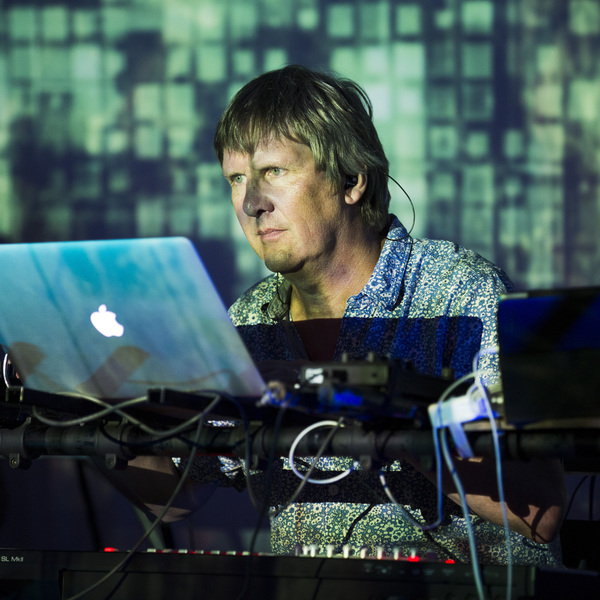
Toby Marks is a master architect of boundary-pushing electronic music. Born in South London, his musical roots span rock, folk, and jazz before the late-’80s Acid House explosion pivoted his trajectory. In 1989, he founded Banco de Gaia, a project that would fundamentally shape the global ambient, chill-out, and world-infused downtempo scenes.
With a prolific catalog of 20 albums—including his early cassette roots and chart-topping independent masterpieces like Maya and Last Train to Lhasa—Toby has continually bridged global acoustic textures with deep electronic production. Whether touring worldwide as a live act and DJ, performing with a full band, or curating independent talent via his label Disco Gecko Recordings, his commitment to music remains unparalleled. Today, we talk with him to explore the workflow, philosophy, and history behind Banco de Gaia.
Interview by the Psybient.org team on 01/01/2026.
Thank you so much for being with us today, Toby. It’s an honor to chat. Your summer schedule was packed with UK shows this year, did a full summer touring closer to home feel like a grounded experience?
To be honest, doing shows in the UK involves a lot of driving so maybe not so grounding. I love travelling abroad so would never choose to only do UK shows but that’s how this year has mostly worked out.
For over three decades, Banco de Gaia has occupied a space breaking boundaries in electronic music. How do you define your core identity and role as an artist?
I have no idea how to answer that. All I can really say is that over the years I have listened to many, many different kinds of music, from rock to jazz to dance to electroacoustic, and I have ended up taking the bits I like from each of them and using it in my own music. As best as I am able, anyway.
Could you take us back to your early days as a musician? What were the foundational sounds or experiences from that time that set the course for your journey ahead?
I started off playing trumpet when I was nine. I had a fantastic teacher for the first year and being able to play simple tunes myself was wonderful. Then one day I played a note which sounded so ‘pure’ it felt like I had created gold. From that moment on I wanted to create that purity more and more and have tried to do it in the music I have created since.
With 20 album releases if we count the early cassettes, could you talk us through how your musical vision has evolved from those days? How do the different eras of your music reflect different missions or challenges?
I think it’s more a matter of where my attention is at any particular time. I was obviously reading a lot about Tibet when I created Last Train to Lhasa, I was listening to a lot of prog rock when I wrote The 9th of Nine Hearts, and I was studying ‘The Great Game’, when Britain and Russia were competing to take control of central, Asia when I wrote Farewell Ferengistan.
In recent years, you’ve dedicated energy to your Rewritten Stories projects and a series of 20th Anniversary reissues. What is the philosophy behind revisiting these classic archives?
It began when I realised that Maya was no longer available on CD. We were going to repress it but then I realised it was 20 years since the original release so why not do something a bit special. That went down very well so we’ve done that for every release as it reaches 20 years, with Farewell Ferengistan coming this year. As for the remixes, so many were lost on random releases that it seemed a good idea to bring them together so they were still accessible for people.
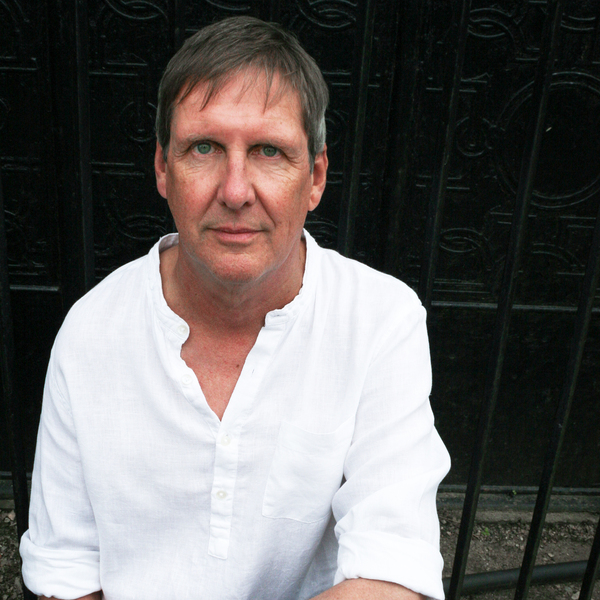
How do you organize your workflow in the studio when a new piece begins to form? On the technical side, are there any particular key pieces of gear or software shaping your sound right now?
I’m actually very disorganised and have no particular way of working. Sometimes I start with a groove, sometimes with a sample and sometimes I just have a concept which I try to turn into sound. The core of my studio these days is Apple Logic running on a Mac, with a whole load of third party plug-in synths and effects I can choose from. I have way more than I need, and I don’t know yet everything that all of them can do, so my compositions often surprise me!
In 1998, you founded Disco Gecko Recordings. Could you tell us about the vision behind the label? What is the thread that makes a project feel right for Disco Gecko?
When my original record deal ended I couldn’t find another label that seemed to get what I was doing. There were some who just wanted me to turn out dance 12”s and others who thought I had to have a vocalist to succeed, so in the end I decided to set up my own label so I could do what I want without compromise. After some years I realised I was hearing various people’s unreleased music that really deserved a wider audience so I’ve tried to help people get it out there. I can’t really say what the vision is but I know when something feels right for the label, and I also have a label manager who offers very helpful insight and feedback.
In the late ’90s and into the 2000s, you made a transition touring with a full live band, do you feel that experience changed the way you composed music in the studio afterward?
When I had the live bands I tended to write thinking about how the band would perform the music to some extent but on the whole I just do what I do and then find ways for the band to adapt it. However, when I wrote The 9th of Nine Hearts I was hoping I would be able to put a band together to perform it so on that occasion I did write with the band in mind a bit more.
How do you approach your live performances nowadays?
With over 30 years of tunes to choose from I try to stay as flexible as possible so I can respond to the particular mood or vibe of any given audience. I also know that, usually, people want to have a good dance and let their hair down so I start from the assumption that it will be a dance-oriented set rather than a more listening focussed downtempo or ambient set. (Although sometimes I get to do those shows, too). I also work with a live video artist when I can as I know one guy on stage with a computer is not the most exciting thing to look at for those who want to watch something.

You’ve seen notable transformations in how music is made and consumed. Looking ahead, how do you see the future of music and technology evolving? Do you think the art of deep listening can survive?
My current area of interest (well, it has been for years actually) is immersive audio and surround sound. I’m particularly interested in Dolby Atmos as an immersive format as it seems to be becoming established as the ‘standard’ format. I do think that listening in immersive formats encourages people to really lose themselves in the music so I’m optimistic that people really ‘getting’ music, rather than just passively consuming it in the background, will continue.
Are there specific films, books, or visual arts that have acted as an inspiration for your studio work?
I’m a bit of a magpie when it comes to composing so I’ll take bits of almost anything as inspiration. The original Lost Horizon movie had a big impact on me along with various sci fi novels when I was young, and I was also overwhelmed the first time I saw a Hieronymus Bosch painting and realised you can create hugely complex works with lots of little stories inside the big picture. The movie Koyaanisqatsi also had a big impact both visually and musically and taught me that you can tell a story without having to use words.
Who is Toby in his day-to-day life?
If I knew the answer to that I might be a very content person! All I can really say is that I am the result of everything that I have experienced and continue to experience. Me today is not me tomorrow.
To close things out, what final message would you like to share with the psybient.org community today?
Keep listening, keep dancing, and keep supporting the artists you love. Most of us are not on major labels with massive budgets but it is the support of genuine fans that keeps us going.
Thank you immensely for your time and for sharing your journey with us. We look forward to everything the future holds for you and Disco Gecko. Until next time, a warm hug and deep respect!
Listen and follow Banco de Gaia:
https://banco.co.uk
http://bancodegaia.bandcamp.com/
http://soundcloud.com/bancodegaia
http://www.youtube.com/bancodegaia
https://www.facebook.com/bancodegaia/
https://www.instagram.com/banco_de_gaia/